Quantum engineering in the solid state
We study quantum coherence in the solid state, from the microscopic mechanisms of loss and decoherence to the design of hybrid quantum systems that connect distinct quantum degrees of freedom. Our current program brings together superconducting circuits, quantum defects, nanomechanics, and hybrid quantum systems.
Current Research
Quantum Defects
Quantum defects can be either a source of decoherence or a useful quantum resource. We study how uncontrolled defects cause loss and noise in superconducting circuits and nanomechanical devices, while developing quantum control of selected defects for quantum information processing.
By combining low-temperature measurements with superconducting and electromechanical platforms, we connect ensemble materials measurements to the spectroscopy and coherent control of individual defects. This two-sided approach informs strategies for improving device coherence and for using controlled defects in sensing, information processing, and hybrid quantum interfaces.
Relevant Publications:
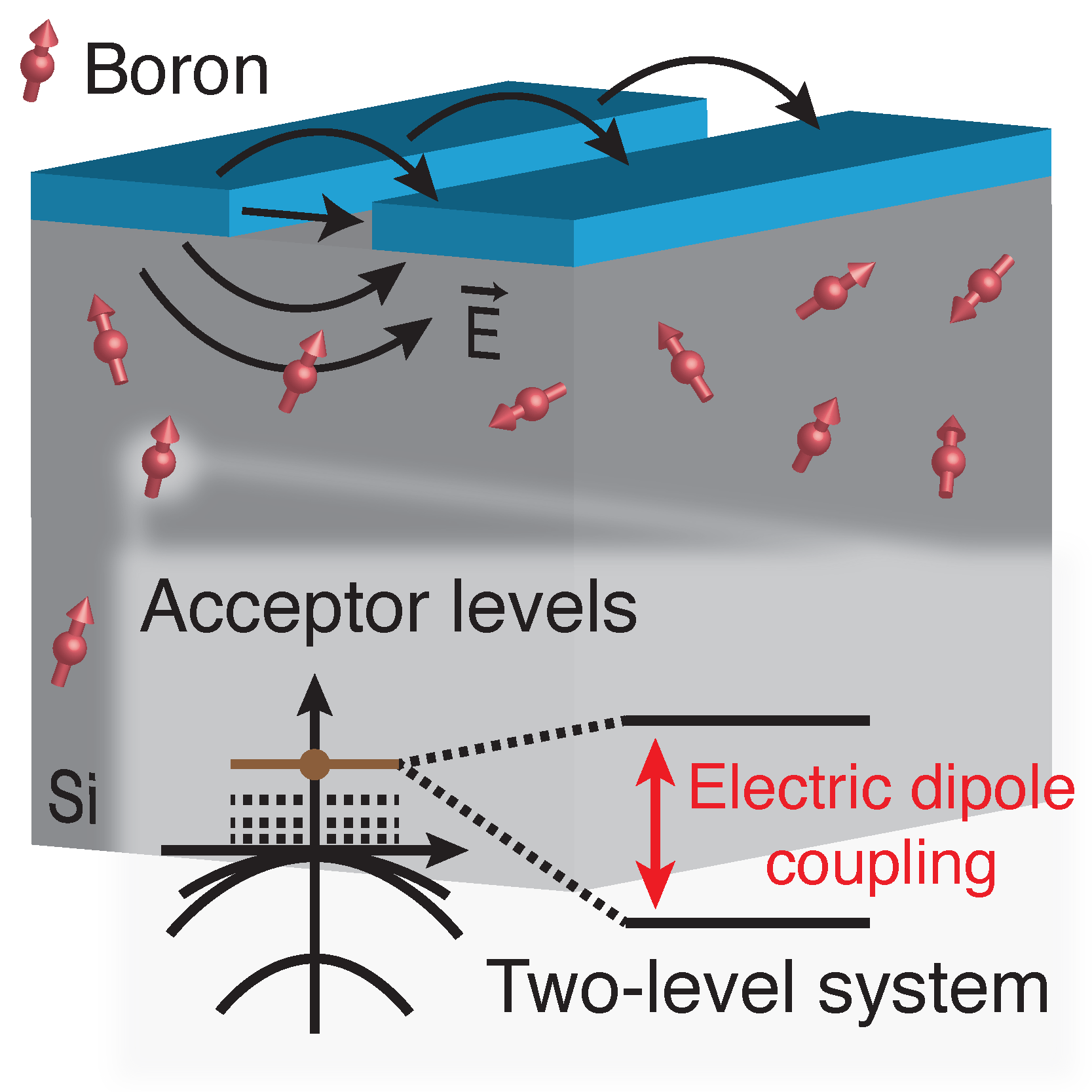
Z.-H. Zhang, K. Godeneli, J. He, M. Odeh, H. Zhou, S. Meesala, and A. Sipahigil, “Acceptor-Induced Bulk Dielectric Loss in Superconducting Circuits on Silicon,” Physical Review X 14, 041022 (2024).
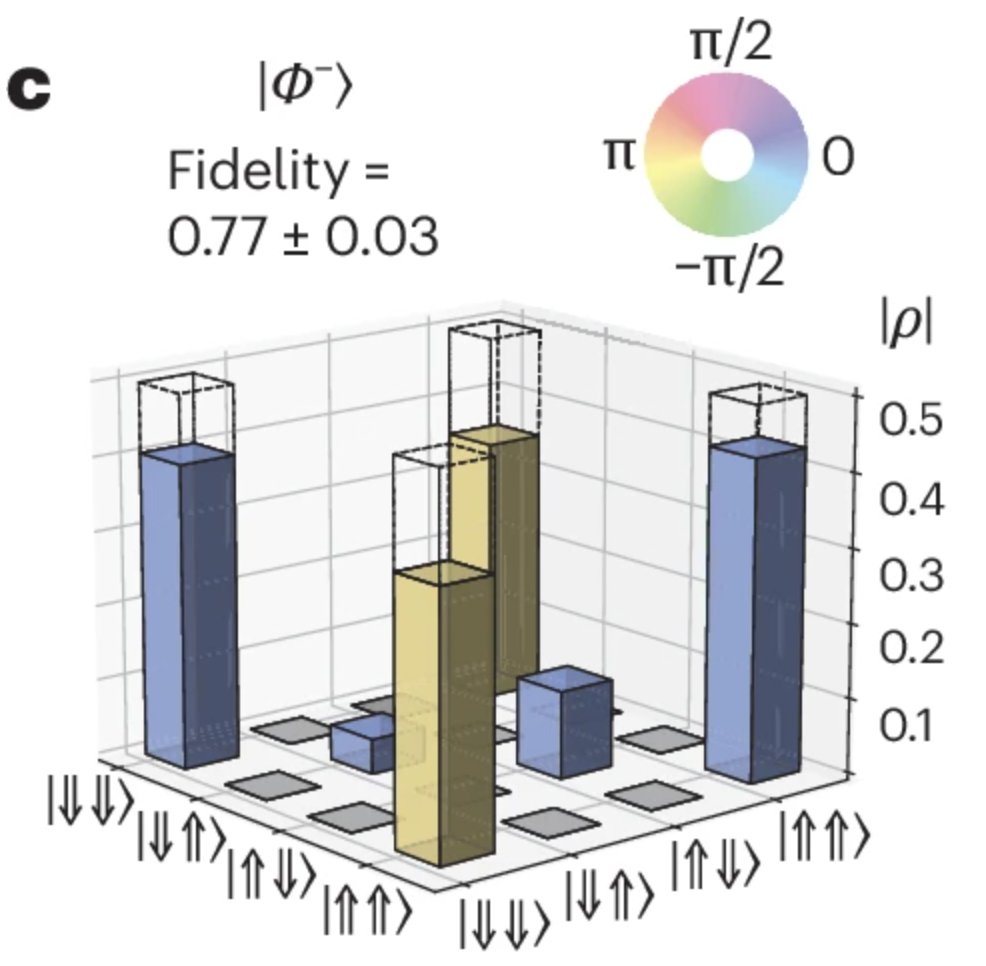
H. Song, X. Zhang, L. Komza, N. Fiaschi, Y. Xiong, Y. Zhi, S. Dhuey, A. Schwartzberg, T. Schenkel, G. Hautier, Z.-H. Zhang, and A. Sipahigil, “Entanglement of a Nuclear Spin Qubit Register in Silicon Photonics,” Nature Nanotechnology 21, 53–57 (2026).
Superconducting Circuits
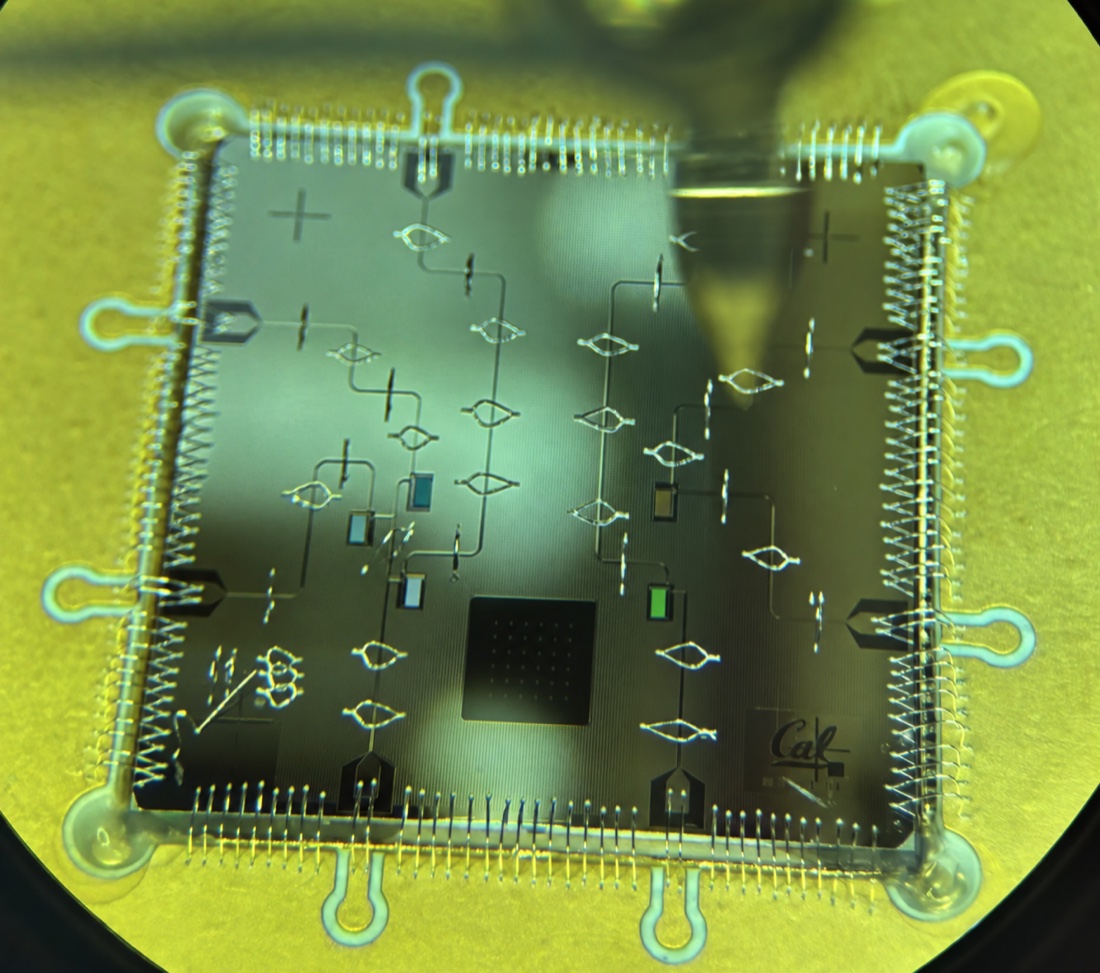
Superconducting circuits offer fast control and strong, tunable interactions in a solid-state platform.
We study the materials and microscopic loss mechanisms that limit circuit performance, working closely with theory and materials collaborators. We design circuits that push device parameters and performance into new regimes, and use them for quantum sensing, simulation, and control.
Relevant Publications:
Z.-H. Zhang, K. Godeneli, J. He, M. Odeh, H. Zhou, S. Meesala, and A. Sipahigil, “Acceptor-Induced Bulk Dielectric Loss in Superconducting Circuits on Silicon,” Physical Review X 14, 041022 (2024).
M. Odeh, K. Godeneli, E. Li, R. Tangirala, H. Zhou, X. Zhang, Z.-H. Zhang, and A. Sipahigil, “Non-Markovian Dynamics of a Superconducting Qubit in a Phononic Bandgap,” Nature Physics 21, 406–411 (2025).
Quantum Nanomechanics
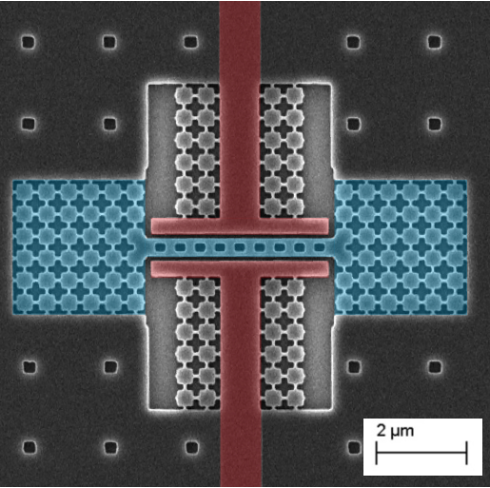
Mechanical resonators provide a powerful platform for quantum science, with applications ranging from precision sensing to quantum transduction and hybrid quantum information processing. Advances in nanofabrication and electromechanics now enable mechanical systems to operate deep in the quantum regime and interface coherently with other quantum platforms.
Our research focuses on mechanical systems operating in the quantum regime. We develop superconducting electromechanical devices and borrow concepts from the MEMS community to engineer coherent control, tunability, and coupling in nanomechanical systems. By integrating mechanics with superconducting quantum circuits, we explore new approaches for quantum transduction and hybrid quantum interfacing.
Relevant Publications:
S. Jahanbani, Z.-H. Zhang, B. Hua, K. Godeneli, B. Müllendorff, X. Zhang, H. Zhou, and A. Sipahigil, “A Nanomechanical Atomic Force Qubit,” arXiv:2407.15387 (2024).
M. Odeh, K. Godeneli, E. Li, R. Tangirala, H. Zhou, X. Zhang, Z.-H. Zhang, and A. Sipahigil, “Non-Markovian Dynamics of a Superconducting Qubit in a Phononic Bandgap,” Nature Physics 21, 406–411 (2025).
Hybrid Quantum Systems
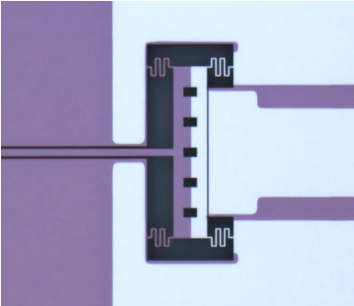
Different quantum platforms offer complementary capabilities: superconducting circuits provide fast control, spins can retain quantum information, and mechanical systems can connect signals across frequency and length scales.
We develop hybrid systems that couple these degrees of freedom through engineered electromagnetic, mechanical, and material interfaces. Our goal is coherent transduction, sensing, and information transfer across otherwise distinct quantum systems.
Relevant Publications:
M. Odeh, K. Godeneli, E. Li, R. Tangirala, H. Zhou, X. Zhang, Z.-H. Zhang, and A. Sipahigil, “Non-Markovian Dynamics of a Superconducting Qubit in a Phononic Bandgap,” Nature Physics 21, 406–411 (2025).
H. Zhou, K. Yu, Y. Balaji, S. Shirol, L. Sementilli, Z.-H. Zhang, A. Schwartzberg, and A. Sipahigil, “Interface Piezoelectric Loss in Superconducting Qubits,” arXiv:2605.15554 (2026).
Past Research
Color centers and solid-state spin defects
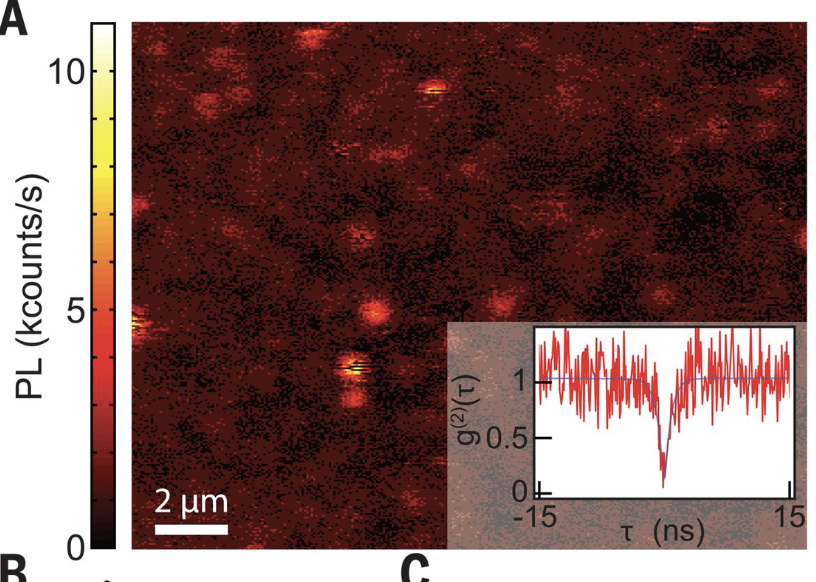
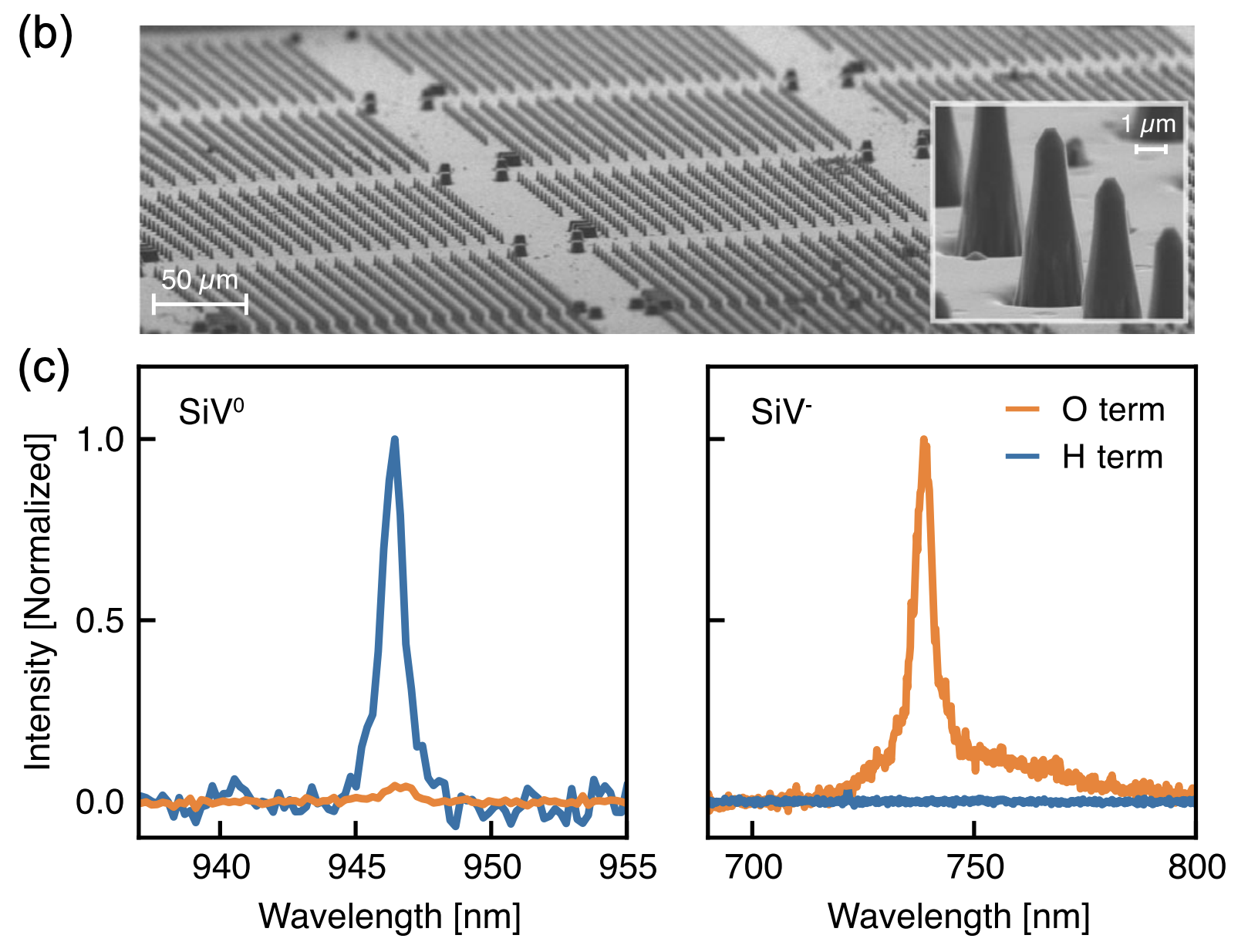
Color centers and solid-state spin defects provided the foundation for our approach to coherence, materials, and quantum interfaces. Earlier work focused on engineering optically active spin defects for quantum information and networking. A major theme was the neutral silicon-vacancy center (SiV0) in diamond: stabilizing its charge state and optical transitions, resolving its bound-exciton structure, and developing optical and microwave methods for spin initialization, coherent control, and readout. Related studies examined photoactivated carrier transport and surface control in diamond, telecom-band emitters, new long-lived diamond defects, and—more recently—spin–photon interfaces and nuclear-spin registers based on defects in silicon.